
When we press the light switch, few people realize that behind the electricity that lights up the room, there is a type of special steel with a thickness of less than 0.35 millimeters operating silently. This extremely low-carbon alloy steel, with a silicon content of 0.5% to 4.5%, known as silicon steel sheets, is supporting the energy system of modern society with an astonishing penetration rate. From the 98% transmission efficiency of the power grid to the 97% motor efficiency of new energy vehicles, this “soft gold in steel” is quietly defining the boundaries of human energy utilization.
The “pacemaker” of the energy network
At the core of the ultra-high voltage substation, the silicon steel sheets, each with a thickness of only 0.23-0.35 millimeters, are undergoing precise magnetic energy conversion. For every 1% increase in silicon content, the material’s resistivity increases by approximately 4 times. This characteristic reduces the transformer’s no-load loss by 30% (source: Institute of Metallurgical Industry Standards). In 2025, the global consumption of silicon steel sheets for transformer cores exceeded 80 million tons, supporting the power network that serves 7.6 billion people.
Through laser etching technology, the width of the magnetic domains is controlled within 2 millimeters. This innovation has reduced the transmission loss of China’s ultra-high voltage projects from 7% to 2.5%, equivalent to saving 120 million tons of standard coal consumption annually, providing a solid foundation for the “dual carbon” goal.
Energy hub for mobile transportation
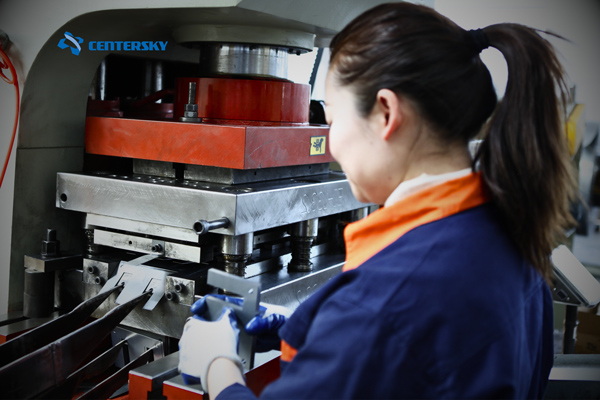
In the drive motors of new energy vehicles, silicon steel sheets are undergoing a technological leap. Mainstream electric vehicles use stator cores made by stacking 0.25-millimeter ultra-thin silicon steel sheets, which enables the motor efficiency to exceed 97%. Baosteel’s B18R060 silicon steel sheet reduces iron loss to 1.8W/kg (1.5T/50Hz), helping to increase vehicle range by 8%.
As the global annual production of electric vehicles exceeds 40 million units, the demand for high-end non-oriented silicon steel for drive motors has soared. These materials require a magnetic flux density B50 of over 1.7T, and iron loss P1.5/50 of less than 4.0W/kg. The cost accounts for approximately 30% of the motor assembly and directly determines vehicle performance and market competitiveness.
The unseen driving force behind smart living
Data center: A single supercomputing center requires the installation of 200 tons of silicon steel sheet products to ensure stable power supply for computing at a rate of one hundred billion operations per second.
Smart home appliances: The variable-frequency air conditioning compressor uses 0.35mm low-loss silicon steel, reducing energy consumption by 40% compared to traditional models.
Medical equipment: The superconducting magnets of the magnetic resonance imaging (MRI) device rely on nanoscale silicon steel sheets to stabilize the magnetic field, and the imaging accuracy has been improved to 0.1mm.
The cutting-edge battlefield of material innovation
The 20JNEX1200 silicon steel sheet developed by JFE of Japan has reduced iron loss to 1.2W/kg, which is only 60% of that of traditional products. The breakthrough is attributed to a 3μm thick nano-magnesium oxide insulating coating, which not only withstands a voltage of 1000V but also increases the stacking coefficient to 98.5%.
The more advanced 0.1mm ultra-thin strip steel has entered the trial stage. It can support the rotational speed of high-speed motors to exceed 50,000 rpm, meeting the demands of emerging fields such as electric aviation. The combined application of amorphous alloy and silicon steel is expected to further reduce the no-load loss of transformers by 30%, becoming a key path for the next-generation energy-saving technology.
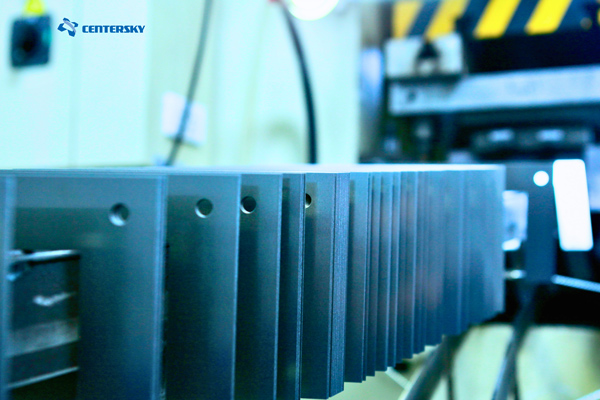
The breakthrough path of made in China
In 2024, China’s silicon steel production reached 161 million tons, accounting for 62% of the global total output (data source: China Metallurgical Society). Cold-rolled silicon steel has achieved full chain self-control:
Thickness breakthrough: The 0.18mm ultra-thin specification has achieved global exclusive mass production.
Technical iteration: Amorphous alloy transformers achieve an energy efficiency 15% higher than international standards.
Green Manufacturing: The silicon steel production line of Baowu Group has achieved a photovoltaic coverage rate of 85%, and the carbon emission per ton of steel has decreased by 40%.
However, challenges remain: the engineering application of high-temperature superconducting materials, and the core patents of solid-state transformers (80% of which are held by European and American enterprises) still need to be overcome. With the advancement of the goal of reducing green electricity production emissions by 40% in 2028, this “breathing steel” will continue to reshape the macroscopic pattern of human energy utilization at the microscopic scale.
Expert Perspective: The evolution history of silicon steel sheets is essentially the chronicle of humanity’s mastery of electromagnetic energy. When the transmission loss per unit of electricity decreased from 30% to 2%, when the range of electric vehicles exceeded 1,000 kilometers, we should remember – it is these silicon steel sheets, which are as thin as human hair, that are building the energy foundation of civilization at the microscopic level.