
Since the beginning of this year, China’s transformer industry has benefited from multiple structural growth drivers, including the global energy transition, the rapid expansion of AI infrastructure, and accelerating investment in power grids. As a result, both the value and volume of China’s transformer exports have increased by more than 40% year on year, maintaining a strong growth trajectory.
However, smaller and mid-sized transformer manufacturers continue to face challenges in expanding into overseas markets due to certification barriers, limited distribution channels, and relatively weak financial capabilities. Many of these companies remain more dependent on the domestic market or on subcontracting and secondary orders from larger exporters.

Copper and GOES Remain Key Cost Drivers for Transformers
Copper and grain-oriented electrical steel (GOES) are two of the principal raw materials used in transformer manufacturing. Copper typically accounts for more than 35% of total transformer costs, while electrical steel accounts for more than 25%. Consequently, fluctuations in the prices of these two materials have a significant impact on transformer manufacturing costs and overall profitability.
Since the fourth quarter of last year, copper prices have surged sharply, pushing up transformer prices as copper-intensive products became increasingly expensive to manufacture. By contrast, prices for GOES, another major transformer input, have remained relatively stable.
Industry sources indicate that the stability of electrical steel prices since the beginning of this year has provided transformer manufacturers with relatively favorable cost conditions and helped support their profit margins.
Strong Overseas Demand, but Limited Upside for High-Grade GOES
As grid modernization accelerates across Europe and the United States, demand for transformers in overseas markets has increased substantially. At the same time, however, a significant portion of overseas customers remains highly price-sensitive.
Although there appears to be limited room for further increases in the price of high-permeability grain-oriented electrical steel (Hi-B steel), prices have been raised by approximately RMB 100–200 per ton on a monthly basis since the beginning of this year. Even so, prices have yet to return to what would be considered a normal or sustainable level, and some products are reportedly still being sold at a loss.
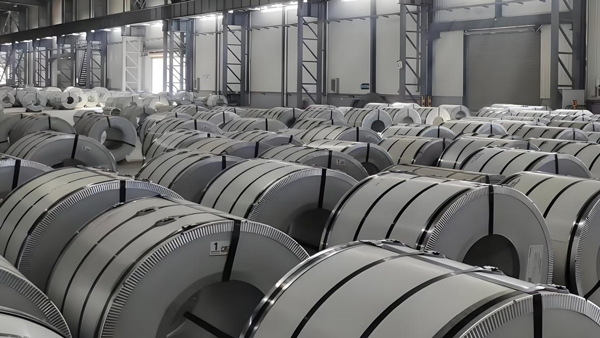
Overseas Demand Structure Continues to Pressure GOES Prices
Demand patterns across different overseas markets have also contributed to pricing pressure on China’s electrical steel industry.
Customers in Africa and the Middle East tend to have stronger demand for conventional electrical steel grades and are less reliant on premium-grade grain-oriented electrical steel. This has increased price competition among Chinese transformer and electrical steel manufacturers, forcing producers to negotiate aggressively over raw-material costs.
This persistent price competition is considered one of the key reasons why GOES prices have remained under pressure despite growing transformer demand.
Another major factor is the rapid expansion of domestic GOES production capacity.
According to incomplete industry statistics, China’s effective GOES production capacity reached approximately 4.08 million tonnes in 2025, representing an increase of around 750,000 tonnes year on year. Total production reached approximately 3.45 million tonnes, up 13% year on year, of which grain-oriented electrical steel production accounted for approximately 2.96 million tonnes.
The continued expansion of domestic capacity has intensified competition among producers and limited the industry’s ability to pass higher costs through to downstream transformer manufacturers.
GOES Prices Could Enter a Gradual Recovery Cycle
Although GOES prices are currently near the bottom of the cycle, market conditions may gradually improve.
Industry analysts expect China’s GOES market to enter a period of range-bound consolidation with an upward bias in 2026, supported by increasing demand from both domestic and international power-grid investment.
The 14th Five-Year Plan’s successor planning cycle, commonly referred to as the “15th Five-Year Plan” (2026–2030), is expected to involve approximately RMB 4 trillion in power-grid investment. Meanwhile, grid modernization programs in the United States and Europe are expected to continue generating strong demand for transformers and related electrical steel products.
Market research suggests that new capacity coming online in 2026, together with increasing order volumes reported by operating producers, could support a gradual recovery in GOES prices.
There are already indications that power-grid projects under the 15th Five-Year Plan are moving into the implementation stage, with related orders beginning to enter the supply chain. Following the impact of the Chinese New Year holiday during the first quarter, a portion of these grid-investment projects is expected to enter the tendering phase from the second quarter onward.
The pace of project implementation appears to be faster than previously anticipated by the market, potentially providing additional support to transformer and electrical steel demand.
Transformer Demand Remains Strong Despite Weakness in Certain Domestic Segments
Since last year, demand for small- and medium-sized transformers from domestic EV charging stations has weakened noticeably. Nevertheless, industry participants remain broadly optimistic about China’s transformer market over the next two years.
The implementation of approximately RMB 4 trillion in planned grid investment is expected to generate substantial incremental demand for transformers. At the same time, China’s rapidly developing energy-storage sector and heavy-duty truck charging infrastructure are expected to create additional demand for conventional transformer products.
Overseas charging infrastructure is also entering a period of accelerated development, creating further opportunities for Chinese transformer manufacturers with established export capabilities.
In China, transformer replacement and upgrading programs in rural and township power networks are also expected to support demand for high-efficiency transformers over the coming years.
More importantly, the rapid expansion of AI data centers and high-performance computing (HPC) facilities has emerged as one of the most certain growth drivers for the transformer industry.
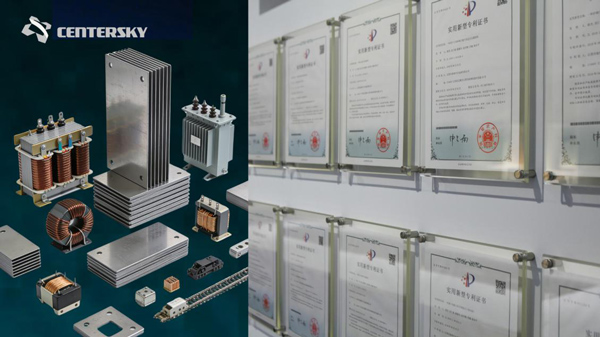
AI Data Centers Could Reshape the Future of Transformer Technology
In October 2025, NVIDIA presented an 800V DC power architecture white paper at the OCP Global Summit, outlining a potential roadmap for power delivery in next-generation AI data centers.
As AI infrastructure continues to scale, future data centers will require substantially higher power density, greater energy efficiency, and more intelligent power-management architectures. Against this backdrop, solid-state transformers (SSTs) are increasingly being considered as a potential long-term solution for next-generation AI factories.
In the longer term, solid-state transformers could gain significant market share in high-end applications such as renewable energy systems, data centers, and smart grids.
Several publicly listed companies have already begun investing in and accelerating the development of solid-state transformer technologies.
However, industry experts generally believe that conventional transformers will remain the dominant technology in data centers and AI computing facilities in the short term, primarily because the cost of solid-state transformers remains significantly higher than that of conventional transformer systems.
Therefore, while SSTs may represent the long-term technological direction of the industry, conventional transformers are still expected to account for the majority of near- to medium-term demand.
Outlook
Overall, China’s transformer and GOES industries are entering a period characterized by strong overseas demand, accelerating domestic grid investment, and rapidly expanding AI-related power infrastructure.
For the GOES market, the combination of China’s large production capacity and intense price competition continues to limit near-term pricing power. Nevertheless, the expected acceleration of domestic grid investment, together with sustained demand from the U.S. and European power-grid upgrade cycles, could gradually tighten the supply-demand balance.
For transformer manufacturers, meanwhile, the combination of grid modernization, renewable energy deployment, energy storage, EV charging infrastructure, and AI data centers is creating a broad-based demand cycle.
The key question for the GOES industry is therefore no longer whether transformer demand will grow, but rather how quickly incremental transformer demand will translate into additional demand for electrical steel and, ultimately, restore pricing power to upstream GOES producers.